How to Spot Fake Yeezy 350s: Authentication Tips
The popularity of Yeezy 350s has made them a frequent target for counterfeiters. Replicas have become increasingly sophisticated, often mimicking the overall shape and colorway at first glance. For collectors and everyday wearers alike, understanding the subtle differences between authentic and fake pairs is an essential skill. This guide outlines a systematic approach to examining key details, from the midsole construction to the packaging, without relying on assumptions about results or outcomes. Each observation provides contextual information that can help in making an informed assessment.
The goal of authentication is not to guarantee a verdict, but to gather enough evidence to form a reasonable judgment. Counterfeit technology evolves continuously, and no single feature alone is definitive. By learning to evaluate multiple aspects together, one can build a clearer picture of a shoe’s origin. The following sections cover the most commonly referenced points of comparison used by experts and experienced enthusiasts.
Note that the methods described here are based on general observations and may not apply to every variant or production batch. Authentic pairs themselves can exhibit minor variations due to manufacturing differences. Therefore, this guide is intended as a reference tool rather than a definitive checklist.
Examining the Boost Pattern and Midsole
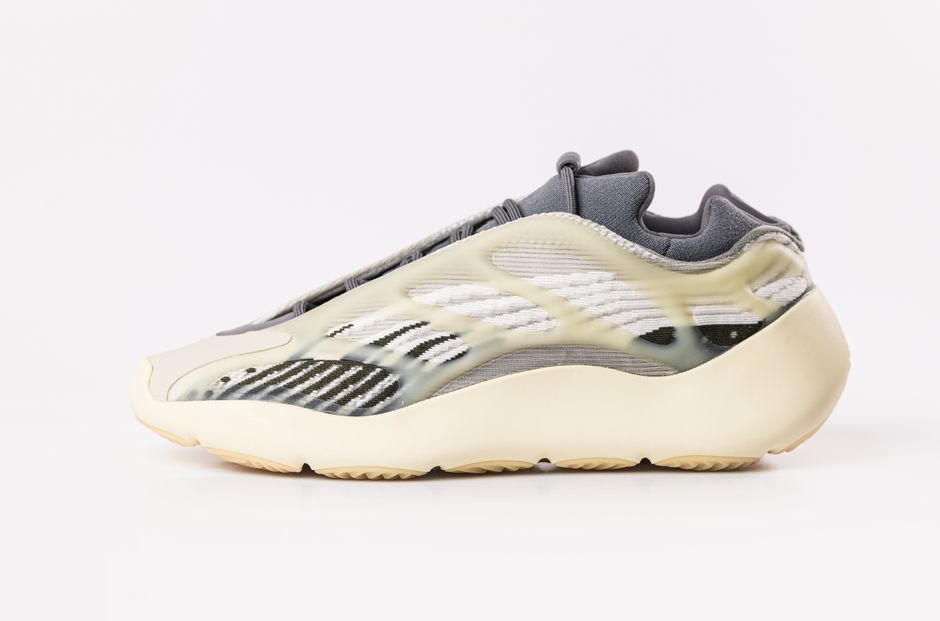
The Boost midsole is one of the most distinctive elements of an authentic Yeezy 350. Genuine Boost pellets are small, rounded, and irregularly shaped, with a visible texture that feels slightly bumpy to the touch. In authentic pairs, the Boost material is exposed along the bottom of the midsole and should appear as a cohesive yet uneven surface. Counterfeit attempts often use a different foam that may look too uniform, with pellets that are either too smooth, too evenly spaced, or entirely absent under a painted layer.
Pay attention to the shape of the midsole from the side. On authentic Yeezy 350 V2 models, the midsole has a distinct curve that rises slightly toward the heel and remains relatively flat through the forefoot. Replicas sometimes show a flatter profile overall or an exaggerated curve near the arch. The placement of the Boost window (the small transparent section on the lateral side) is another detail to verify. In authentic pairs, this window is positioned consistently and the orange or blue tint inside should be visible without being overly bright or opaque.
Finally, consider the overall weight of the shoe. Authentic Yeezy 350s are notably lightweight due to the Boost material and Primeknit upper. Counterfeit versions may feel heavier or unbalanced because of different foam compositions or added reinforcement layers. While weight alone is not conclusive, it can serve as an additional data point when combined with other observations.
Stitching and Material Construction
The Primeknit upper on authentic Yeezy 350s is woven in a pattern that varies by colorway but always follows a consistent, tight weave. Examine the fabric closely under good lighting. Authentic Primeknit has a slightly textured, three-dimensional appearance with distinct variations in thread direction. Counterfeit uppers often use a flatter, more uniform knit that lacks depth, or they may replicate the pattern but with irregular spacing. The stitching along the toe cap, heel, and collar should be precise and evenly spaced. Loose threads, skipped stitches, or inconsistent tension are common red flags.
The tongue area is particularly telling. On authentic Yeezy 350 V2s, the tongue is integrated into the Primeknit rather than being a separate piece. The absence of a visible seam where the tongue meets the vamp is a hallmark of genuine construction. Many fakes, however, stitch a separate tongue piece onto the upper, creating a visible line or bump. The heel lining should also be smooth and well-attached, without excess glue or loose fabric.
Materials used for the lace loops and eyelets differ between authentic and counterfeit pairs. Authentic laces are slightly waxy and have a matte finish, while replica laces may appear glossy or too stiff. The eyelets are typically reinforced with a thin plastic coating on authentic models, whereas fakes might use raw fabric or a thicker plastic that feels cheap. Observing these material properties under direct light can reveal inconsistencies.
Heel Tab, Pull Tab, and Tongue Details
The heel tab on the Yeezy 350 V2 is one of the most copied features, yet it often contains errors. Authentic heel tabs are made of a semi‑translucent material that allows light to pass through faintly. The tab should be attached with a slight downward angle, curving inward toward the Achilles area. Counterfeit versions sometimes use a fully opaque tab or one that is too rigid. The stitching on the tab should match the colorway and be uniform; irregular spacing or a single loose thread can indicate a replica.
The pull tab (the small loop at the back of the heel) varies by generation. On later V2 models, the pull tab is smaller and lies closer to the heel. Its placement should be symmetrical from both sides. Many fakes position the pull tab too high or too low, or the stitching that attaches it may be noticeably uneven. The material of the pull tab itself should feel similar to the heel tab – slightly flexible and translucent – not thick or rubbery.
Tongue details include the shape and the position of the three stripes on the side. On authentic pairs, the three stripes are knitted into the upper and have a slightly raised texture. Counterfeits often print them on with paint or use a different thread thickness. The stripe pattern should also align correctly with the toe curve; misalignment by even a few millimeters is a common replicating error. Additionally, the tongue area should not have any extra padding – authentic Yeezy 350s have a very thin, almost unpadded tongue that conforms to the foot.
Box, Labels, and Packaging
The box and its labels provide important contextual information, though packaging can be replicated with varying degrees of accuracy. Authentic Yeezy 350 boxes are made of a specific cardboard that has a slight texture and a matte finish. The colors on the box should match the official release – for example, the adidas logo and the Yeezy text should be clear, not blurred or off‑register. Examine the label on the side of the box: it lists the style code, size, and other details in a specific font. The style code should match the official release for that colorway.
Check the barcode and the font of the printed numbers. Authentic labels use a consistent font that is slightly condensed, while fakes may use a different typeface or have uneven spacing. The country of origin is usually printed; most authentic pairs are made in China, but some earlier releases were made in other countries. This alone is not a red flag, but combined with other discrepancies it can add weight. Also, look at the sticker on the box – it should be firmly attached without bubbles or peeling edges.
Inside the box, the tissue paper and extra laces are often overlooked but can be revealing. Authentic Yeezy 350s come with a single pair of extra laces that match the shoe’s colorway, wrapped in plain white tissue paper. Some fakes include two pairs of extra laces or use printed tissue paper with logos. The shape of the foam insert inside the box also differs; genuine inserts have a cut‑out that precisely fits the shoe, whereas replicas may have a generic shape that does not align perfectly.
Overall Sizing, Fit, and Red Flags
Sizing is another area where differences can emerge. Authentic Yeezy 350s are known to fit about half a size small relative to many other sneakers, but this varies by individual. Counterfeit pairs sometimes have inconsistent sizing – a size 10 may feel like a size 9.5 in one pair and an 11 in another. Trying on the shoe if possible, or comparing the insole length, can provide clues. The insole itself should have a specific foam density and a non‑slip finish on the bottom. Many replicas use thinner insoles that lack the adhesive gripping pattern.
Look for the overall symmetry of the shoe. Place the pair side by side and examine the toe shape, heel height, and the alignment of the stripe pattern. Authentic Yeezy 350s are almost perfectly symmetrical, while counterfeit pairs may show slight differences between the left and right shoe. Also check the toe cap – the knit should curve uniformly around the toes, not dip or bulge in an unusual way.
Finally, be aware of common red flags that often appear across multiple fakes. Excess glue residue around the midsole or the heel tab is a frequent issue. Strong chemical odors from the materials, a plastic smell, or a complete absence of any smell (suggesting a recently dried surface) can also be indicative. The presence of these signs does not automatically prove a shoe is fake, but when seen alongside other inconsistencies, they strengthen the argument for further scrutiny. Authentication is a process of gathering evidence, and each detail contributes to a more complete understanding of the item at hand.